
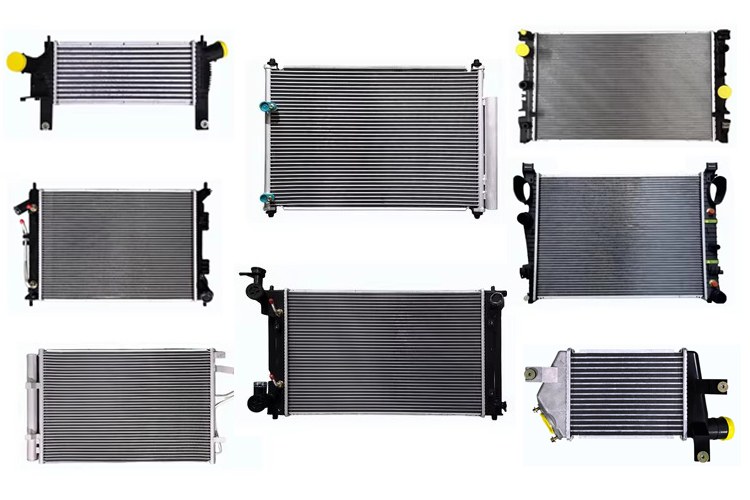
Automobile Radiator
Automobile Radiator
The automobile radiator, commonly referred to as "the rad," is the primary heat exchanger in a car's cooling system. Its main function is to transfer heat from the hot coolant flowing through the engine to the ambient air. Modern radiators are typically constructed from aluminum alloys, featuring a core of扁平 tubes and thin cooling fins. As coolant flows through the tubes, the fins dissipate heat to the air stream, often assisted by an electric cooling fan.
The radiator cap plays a crucial role in system efficiency by maintaining internal pressure. This pressurization raises the boiling point of the coolant, preventing vapor lock and ensuring effective heat transfer even under high thermal loads. Additionally, the thermostat regulates coolant flow, ensuring the engine reaches and maintains its optimal operating temperature.
Maintenance Recommendations
Keep Exterior Clean: Regularly inspect the radiator face for debris, insects, or dust buildup that can obstruct airflow. Use low-pressure water or compressed air to clean the fins from the inside out, avoiding damage to the delicate structures.
Check Coolant Level and Condition: Monitor the coolant reservoir level and inspect the fluid for discoloration or sediment. Contaminated coolant can clog the radiator core and reduce heat transfer efficiency.
Inspect Hoses and Connections: Periodically examine the radiator inlet and outlet hoses for cracks, bulges, or leaks. Replace any damaged hoses immediately to prevent catastrophic cooling system failure.
 Send Email
 Franky Chung
 17757458869
 Franky